Light Therapy Insights, Delivered
Get practical guidance, new device reviews, and research summaries written for real people.
You’re in. Watch your inbox soon.
Oops! Something went wrong while submitting the form.

Light Therapy Insights

Get practical guidance, new device reviews, and research summaries written for real people.
Discover what clinical research reveals about light therapy safety, common side effects, FDA regulations, and who should avoid treatment. Evidence-based guide with medical journal citations.
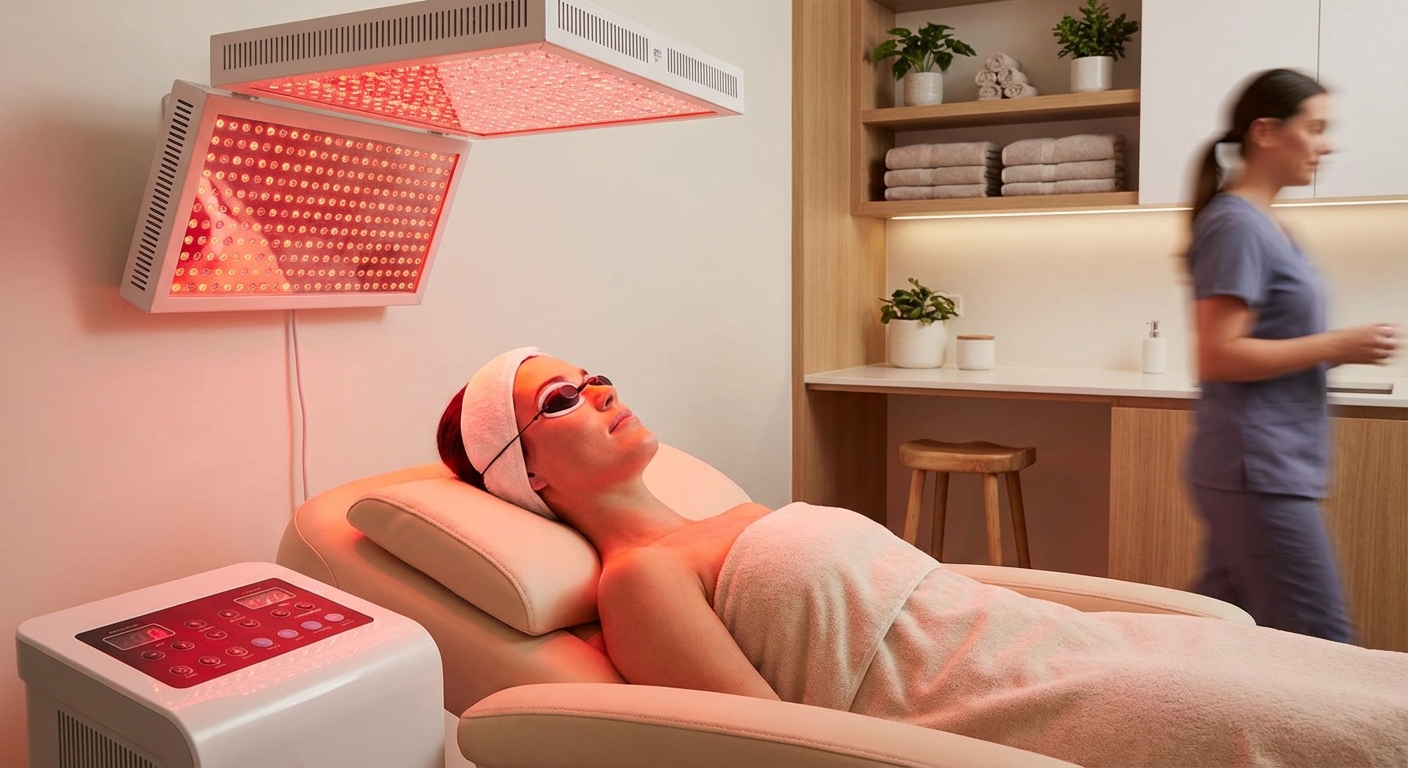
If you're considering light therapy for skin rejuvenation, wound healing, or seasonal mood support, you've probably wondered: is it actually safe? With devices flooding the market—from at-home panels to professional treatments—it's worth understanding what the science really says.
The good news? Multiple clinical trials demonstrate that light therapy, particularly in the red and near-infrared spectrum (630-850nm), is remarkably safe when used properly. A 2020 study in the Journal of Biophotonics involving 136 participants found LED red light therapy safe up to 480 J/cm² for Caucasian skin and 320 J/cm² for darker skin tones, with only mild, temporary side effects like transient redness.
Research published in Aesthetic Surgery Journal confirms that low-level light therapy effectively stimulates collagen production and improves skin texture without the risks associated with ablative procedures. The mechanisms are well-understood: specific wavelengths enhance cellular energy production and tissue repair at the mitochondrial level.
According to StatPearls phototherapy guidelines, the most frequent side effects include:
These effects pale in comparison to traditional resurfacing treatments. As one 2014 controlled trial demonstrated, participants experienced "significantly improved skin complexion" with no serious adverse events over 30 treatment sessions.
While generally safe, certain individuals should skip light therapy or consult a physician first:
The FDA classifies most light therapy devices as Class II medical devices, requiring manufacturers to demonstrate safety and effectiveness. FDA guidance on photobiomodulation devices emphasizes proper wavelength specifications, eye protection, and clear labeling.
Importantly, research in Clinical Dermatology notes that narrowband UVB and red light therapy haven't shown increased skin cancer risk in long-term studies—unlike tanning beds or uncontrolled UV exposure.
Light therapy offers a safe, non-invasive option for skin health when devices are used according to manufacturer guidelines. The extensive clinical evidence supports its safety profile, particularly for red and near-infrared wavelengths. As with any treatment, consulting a healthcare provider ensures it's appropriate for your specific situation.
Get practical guidance, new device reviews, and research summaries written for real people.