Light Therapy Insights, Delivered
Get practical guidance, new device reviews, and research summaries written for real people.
You’re in. Watch your inbox soon.
Oops! Something went wrong while submitting the form.

Light Therapy Insights

Get practical guidance, new device reviews, and research summaries written for real people.
Understanding the key differences between red and blue light therapy to make an informed decision for your specific skin concerns.
If you've been researching light therapy for skin concerns, you've probably hit the same wall I did: everyone's talking about wavelengths and collagen, but nobody's giving straight answers about which therapy actually works for what.
Let me break it down based on what the research actually shows.
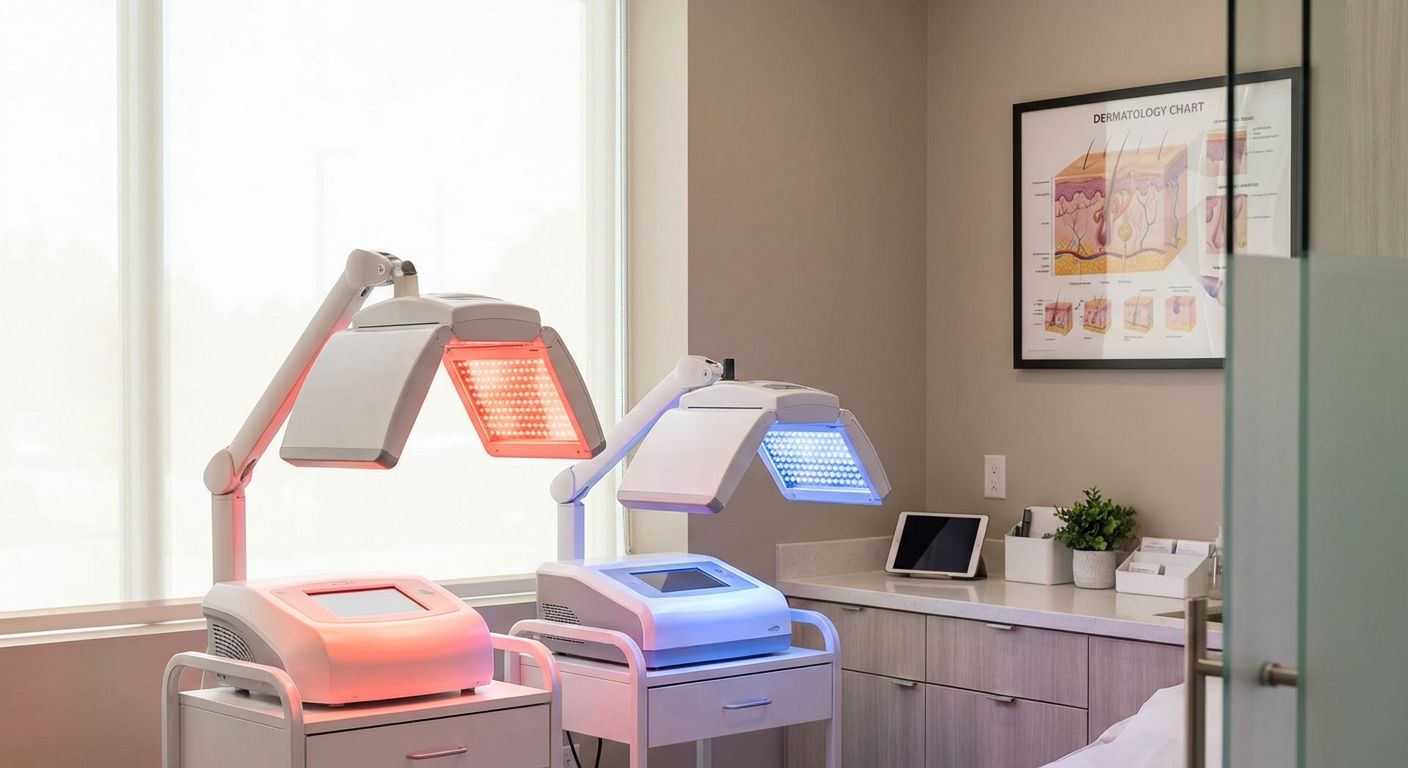
Red and blue light therapy work on completely different skin layers, which is why they treat different problems. Blue light (around 415nm) targets surface-level concerns by killing acne-causing bacteria in your pores. Red light (630-850nm) penetrates deeper, stimulating collagen production and reducing inflammation.
If you're dealing with active breakouts, blue light is your answer. Studies show it kills P. acnes bacteria without antibiotics, making it effective for mild to moderate acne. I've seen people get noticeable results within 4-6 weeks of consistent use.
The catch? Blue light doesn't do much for aging concerns. It's a one-trick pony, but it does that trick really well.
Red light therapy addresses multiple skin issues simultaneously. Research demonstrates it boosts collagen synthesis, reduces fine lines, and speeds healing. It's also proven effective for inflammatory conditions like rosacea.
What makes red light particularly interesting is its ability to enhance cellular energy production. This 2014 study found it increases ATP production in skin cells, essentially giving your skin more fuel to repair itself.
Choose blue light if:
Choose red light if:
Here's something most articles won't tell you: you're not locked into one option. Many people alternate between therapies or even use devices that combine both wavelengths. The key is consistency—whether you pick red, blue, or both, you need to commit to regular sessions for 8-12 weeks before judging results.
Your skin's specific needs should drive your decision, not marketing hype. Start with the therapy that addresses your primary concern, track your results, and adjust from there.
Get practical guidance, new device reviews, and research summaries written for real people.