Light Therapy Insights, Delivered
Get practical guidance, new device reviews, and research summaries written for real people.
You’re in. Watch your inbox soon.
Oops! Something went wrong while submitting the form.

Light Therapy Insights

Get practical guidance, new device reviews, and research summaries written for real people.
The full story about light therapy from a medical, cellular, and skincare perspective
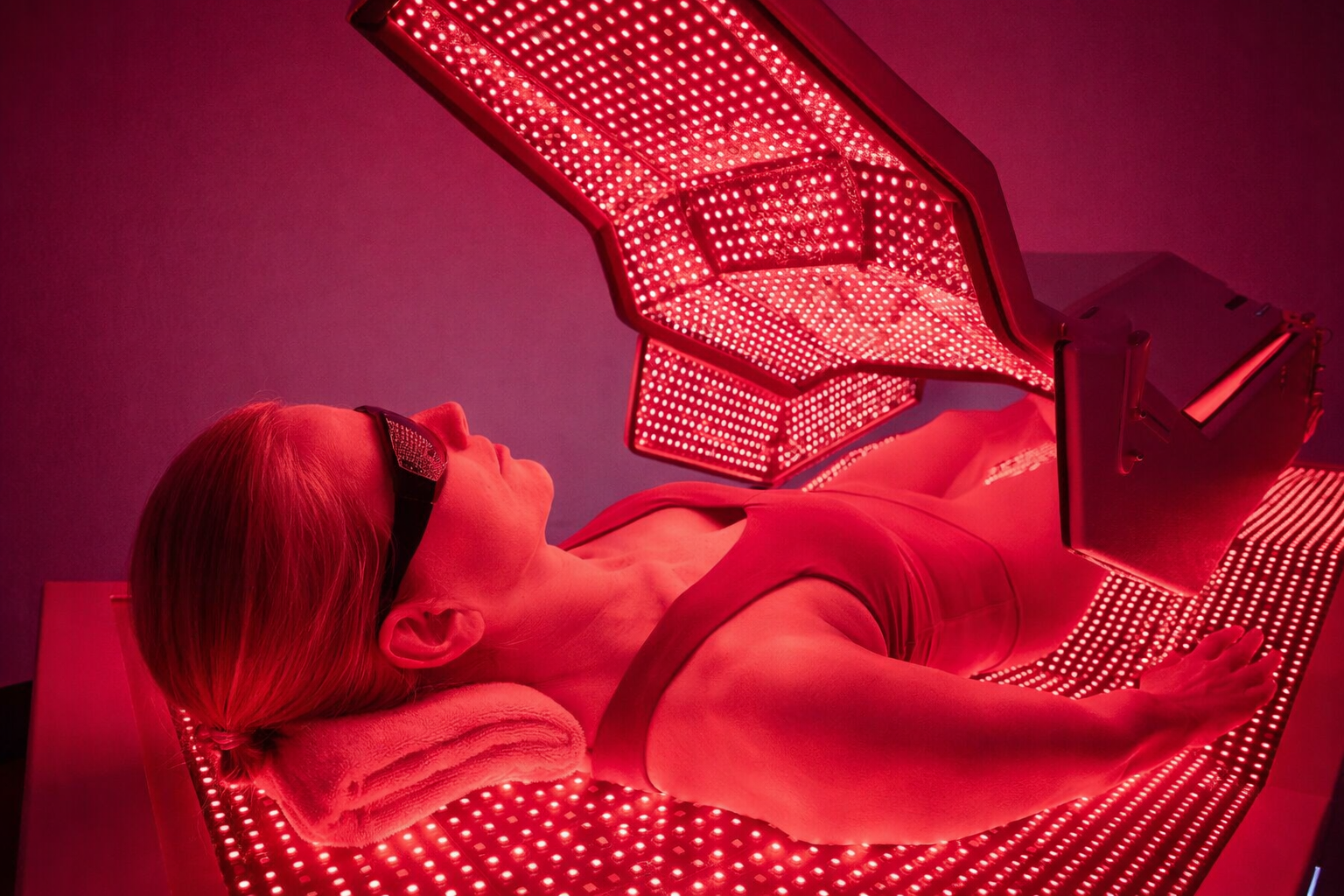
Light therapy is often described in broad or imprecise terms. It is frequently grouped together with lasers, ultraviolet treatments, or cosmetic procedures, despite operating through a different biological mechanism. As consumer interest has grown, so has confusion around what light therapy actually is and what it is capable of doing.
This article provides a clear, research-based explanation of light therapy, how it works, and where it fits within skin health and dermatology.
In clinical and research settings, light therapy most commonly refers to photobiomodulation, sometimes abbreviated as PBM. Photobiomodulation describes the use of specific wavelengths of visible or near-infrared light to influence cellular activity without causing thermal damage or tissue injury.
This is an important distinction. Photobiomodulation does not rely on heat, ablation, or controlled injury. It also does not involve ultraviolet radiation. Instead, it uses low-energy, non-ionizing light designed to interact with cellular processes in a supportive manner.
Forms of therapeutic light have been studied for decades across multiple medical disciplines, including wound care, pain management, and dermatology. Advances in LED technology have made it possible to deliver these wavelengths more precisely and safely, which is why light therapy is now available beyond clinical environments.
The effects of light therapy begin at the cellular level. When light at specific wavelengths reaches the skin, it can be absorbed by molecules known as chromophores. One of the most studied chromophores in photobiomodulation research is cytochrome c oxidase, an enzyme involved in mitochondrial energy production.
Absorption of light energy can influence mitochondrial activity and cellular signaling pathways. This interaction is thought to contribute to changes in inflammation, tissue repair, and collagen-related processes. The response is biological rather than mechanical, meaning the skin is not being damaged in order to stimulate repair.
Different wavelengths interact with tissue differently. Shorter wavelengths tend to be absorbed more superficially, while longer wavelengths are capable of reaching deeper layers. This principle underlies why different colors of light are studied for different applications.
Within dermatology and skin health research, photobiomodulation has been studied for several overlapping uses. These include support of skin repair, modulation of inflammatory responses, influence on collagen activity, and reduction of acne-associated bacteria.
The effects observed in studies are generally gradual and cumulative. Light therapy does not produce immediate structural changes in the skin, nor does it function as a substitute for medical treatment when disease is present. Its role is better understood as supportive rather than corrective.
Because of this, light therapy is often discussed as a long-term approach to maintaining skin function rather than as a short-term intervention designed to deliver rapid cosmetic change.
Much of the foundational research on photobiomodulation comes from controlled clinical or laboratory settings. In these environments, variables such as wavelength, exposure time, and treatment area are selected for specific therapeutic goals.
At-home light therapy devices are designed differently. They typically operate at lower output levels and are built with broader safety margins. This limits intensity but allows for regular, repeatable use without professional supervision.
From a biological perspective, the distinction between clinical and at-home use is less about location and more about treatment context. Many of the biological effects associated with photobiomodulation appear to depend on repeated exposure over time, which is one reason consistency is often emphasized in research discussions.
Current evidence supports the idea that photobiomodulation can influence cellular processes relevant to skin health. Studies suggest it may support collagen-related activity, reduce certain types of inflammation, and improve aspects of skin quality when used consistently.
At the same time, light therapy does not reverse advanced structural aging, dramatically tighten loose skin, or replace medical procedures. It is not equally effective for every condition or individual, and outcomes vary based on multiple factors.
A credible discussion of light therapy acknowledges both its potential and its limitations. Understanding those boundaries is essential for evaluating claims responsibly.
Interest in light therapy reflects a broader shift toward non-invasive approaches in skincare and dermatology. Many people are looking for options that do not rely on aggressive procedures or prolonged recovery.
Light therapy aligns with this interest because it is generally well tolerated and adaptable to regular routines. However, increased visibility has also led to oversimplified messaging. A clear understanding of the underlying science helps separate legitimate applications from exaggerated promises.
Photobiomodulation remains an active area of research. While many mechanisms are well described, optimal parameters for specific dermatologic applications are still being studied. This is particularly true in consumer-facing contexts, where device design and usage patterns vary widely.
Most conclusions about light therapy are based on trends observed across multiple studies rather than single definitive trials. Incremental improvement over time is a more accurate expectation than rapid transformation.
Light therapy, in the form of photobiomodulation, is a legitimate and well-studied area of scientific interest. It is grounded in cellular biology and has documented relevance to skin health when applied appropriately.
Understanding what light therapy is, how it works, and what it can realistically support provides a foundation for evaluating both research findings and real-world use. In future articles, we will examine specific wavelengths, safety considerations, and treatment contexts in greater detail.
Get practical guidance, new device reviews, and research summaries written for real people.