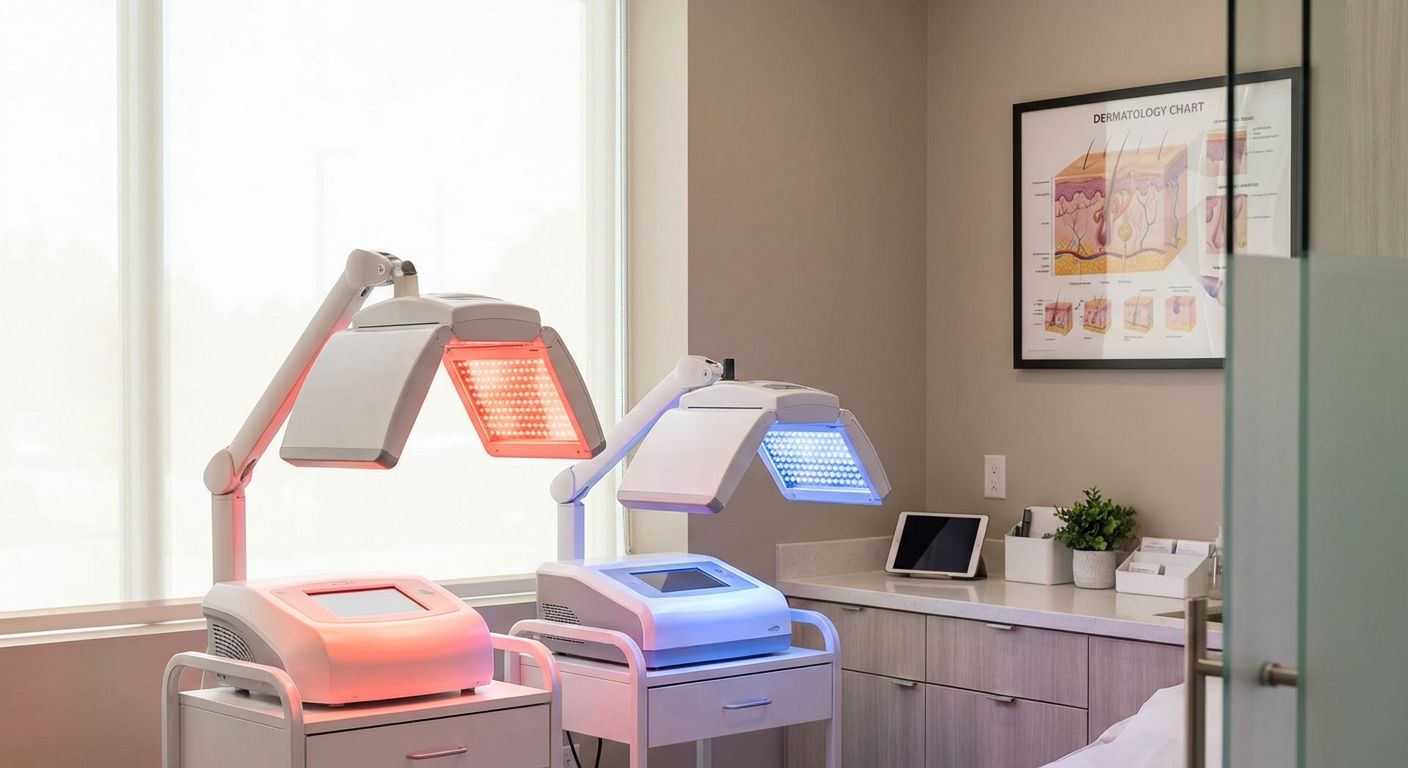
Acne scars affect an estimated 95% of people with acne to some degree, and finding effective treatments that don't involve aggressive procedures or significant downtime remains a priority for millions. Red light therapy — also known as photobiomodulation — has emerged as a promising, non-invasive option. But does it actually work for scarring? Here's what the clinical evidence shows. (For foundational context, see our evidence-based overview of light therapy.)
How Acne Scars Form — and Why They're Hard to Treat
Acne scars result from the skin's inflammatory response to breakouts. When inflammation damages collagen in the dermis, the repair process can produce too little collagen (atrophic scars — ice pick, boxcar, rolling) or too much (hypertrophic and keloid scars). Post-inflammatory hyperpigmentation (PIH) — the dark marks left after breakouts — isn't technically scarring but is often grouped with it because it's equally frustrating.
Traditional treatments like microneedling, chemical peels, and laser resurfacing work by creating controlled injury to stimulate collagen remodeling. Red light therapy takes a fundamentally different approach: it stimulates repair without creating any new damage.
The Science: How Red Light Therapy Addresses Acne Scars
Red and near-infrared light (630–850nm) interact with skin cells through several mechanisms relevant to scar improvement:
Collagen Remodeling: Red light activates fibroblasts — the cells responsible for producing collagen and elastin. In scarred tissue where collagen architecture is disorganized, photobiomodulation promotes more organized collagen deposition. Studies show that red light therapy increases type I and type III collagen synthesis, which are critical for restoring normal skin structure.
Anti-Inflammatory Effects: Active inflammation worsens scarring outcomes. Red light reduces pro-inflammatory cytokines like TNF-α and IL-6 while increasing anti-inflammatory mediators. This is especially relevant for preventing new scars from forming during active breakouts.
PIH Reduction: Near-infrared wavelengths help normalize melanocyte activity, gradually fading the dark marks left by inflammatory acne. For a deeper dive into this mechanism, see our guide to light therapy for hyperpigmentation.
Enhanced Wound Healing: Photobiomodulation accelerates the wound healing cascade by increasing ATP production and promoting angiogenesis (new blood vessel formation), delivering more nutrients and oxygen to damaged tissue.
What Clinical Studies Show
Research on red light therapy for acne scarring is growing, though it remains smaller in volume compared to anti-aging studies. Key findings include:
A 2018 study in Lasers in Medical Science found that LED phototherapy significantly improved atrophic acne scars after 8 weeks of treatment, with measurable increases in collagen density on ultrasound imaging. A 2020 randomized controlled trial demonstrated that combining red light therapy with topical treatments produced superior scar improvement compared to topicals alone — a 40% greater reduction in scar depth. Multiple studies confirm that LED therapy reduces post-procedural inflammation and PIH when used after microneedling or laser treatments, suggesting a valuable role as an adjunct therapy.
The evidence is encouraging but comes with caveats: most studies use relatively small sample sizes, and results vary based on scar type, severity, and individual healing capacity. Deep ice pick scars, for instance, are unlikely to be fully resolved by light therapy alone.
Best Wavelengths for Acne Scars
Not all light therapy wavelengths are equally effective for scarring. Based on current research:
630–660nm (Red): Best for surface-level scarring, PIH, and skin texture improvement. Stimulates collagen synthesis in the upper dermis. 810–850nm (Near-Infrared): Penetrates deeper, reaching the mid-dermis where atrophic scars originate. Most effective for deeper rolling and boxcar scars. Blue Light (415nm): Not effective for scarring, but useful for preventing new breakouts that cause additional scars. Learn more in our red vs. blue light therapy comparison.
Devices offering both red and near-infrared wavelengths simultaneously will address the broadest range of scar types. For specific device recommendations, see our expert-ranked LED face mask reviews.
Treatment Protocol for Acne Scars
Treating acne scars with light therapy requires patience and consistency. Based on clinical protocols:
Frequency: 4–5 sessions per week during the active treatment phase. For detailed scheduling guidance by device type, see our treatment frequency guide.
Duration: 10–20 minutes per session depending on device power density.
Timeline: Expect 12–16 weeks of consistent use before meaningful scar improvement. PIH typically responds faster (6–8 weeks) than structural scarring (12+ weeks). Collagen remodeling continues for months after treatment begins.
Maintenance: After initial improvement, 2–3 weekly sessions can maintain results and continue gradual improvement.
Combining Red Light Therapy with Other Scar Treatments
Red light therapy works synergistically with other evidence-based approaches:
Microneedling + Red Light: Use LED therapy 24–48 hours after microneedling to reduce inflammation, accelerate healing, and enhance collagen stimulation. Multiple studies show this combination produces superior results to either treatment alone.
Topical Retinoids: Retinoids accelerate cell turnover and complement light therapy's collagen-stimulating effects. Use on alternate evenings.
Vitamin C Serum: Apply after LED sessions. Vitamin C inhibits melanin production (addressing PIH) and is a cofactor in collagen synthesis.
Niacinamide: Reduces inflammation and melanosome transfer. Safe to use alongside light therapy daily.
Chemical Exfoliation: AHAs and BHAs promote cell turnover that complements collagen remodeling. Use on non-treatment days to avoid photosensitivity concerns.
What Red Light Therapy Can and Cannot Do for Scars
Realistic expectations:
Red light therapy can gradually improve skin texture, reduce the appearance of shallow scarring, fade PIH and dark marks, enhance results from other scar treatments, and prevent future scarring by reducing inflammation during active acne.
Red light therapy cannot eliminate deep ice pick scars, replace surgical scar revision for severe scarring, produce overnight results, or work without consistent, long-term use.
Before starting any light therapy routine, review our comprehensive safety guide to ensure it's appropriate for your skin type and any medications you're taking.
The Bottom Line
Red light therapy offers a low-risk, non-invasive approach to improving acne scars — particularly when used consistently over 12+ weeks and combined with complementary treatments. While it won't erase deep structural scarring, it can meaningfully improve skin texture, fade post-inflammatory marks, and enhance the results of more aggressive treatments. For most people dealing with mild to moderate acne scarring, photobiomodulation deserves a place in the treatment strategy.





.svg)
.jpeg)