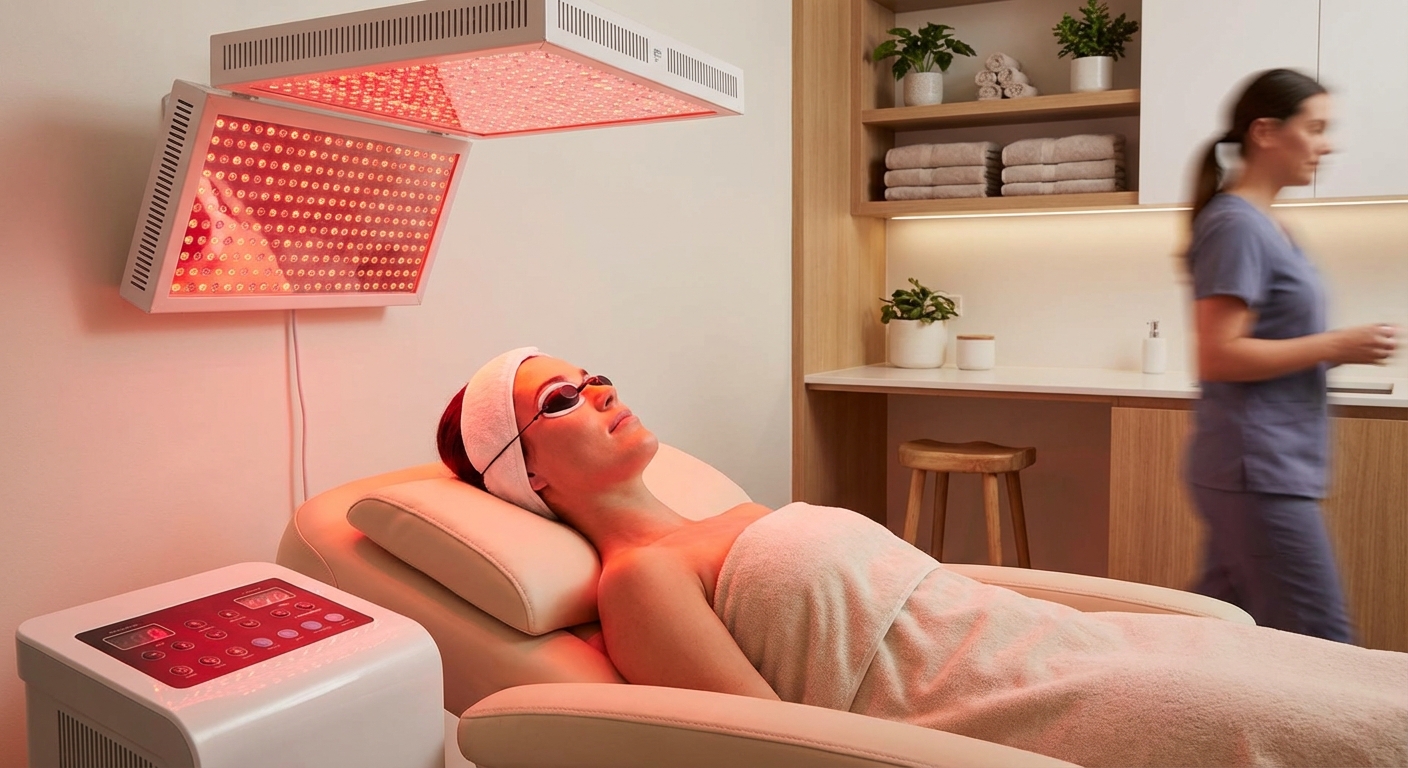
When shopping for a light therapy device, you'll encounter two main wavelength categories: red light (typically 630–660nm) and near-infrared or NIR (typically 810–850nm). They're often discussed interchangeably, but they interact with your body in meaningfully different ways. Understanding these differences helps you choose the right device and protocol for your specific goals. (For a broader introduction, see our evidence-based light therapy overview.)
The Fundamental Difference: Penetration Depth
The most important distinction between red and near-infrared light is how deep each penetrates into tissue. Light wavelength directly determines penetration depth because different tissue components (water, hemoglobin, melanin) absorb different wavelengths at different rates.
Red Light (630–660nm): Penetrates approximately 2–5mm into tissue. This reaches the epidermis and upper dermis — the layers where collagen production, melanocyte activity, and most skin-level processes occur. Red light is visible to the human eye as a bright red/orange color.
Near-Infrared Light (810–850nm): Penetrates approximately 5–30mm+ into tissue, reaching deep dermis, subcutaneous fat, muscle, and even bone. NIR is invisible to the human eye — you can't see it working, which is why most devices include a visible red indicator light. This deeper penetration makes NIR uniquely suited for conditions involving tissue below the skin surface.
How Each Wavelength Works at the Cellular Level
Both red and NIR light interact with the same primary target: cytochrome c oxidase (CCO), an enzyme in the mitochondrial electron transport chain. When photons hit CCO, they displace nitric oxide, allowing oxygen to bind more efficiently and increasing ATP production. This is the core mechanism of photobiomodulation.
However, the cellular response differs by depth and tissue type. Red light primarily activates fibroblasts in the dermis (collagen and elastin production), keratinocytes in the epidermis (skin barrier function), and melanocytes (pigment regulation). Near-infrared light activates those same cells plus deeper targets including muscle cells (myocytes), nerve cells (promoting neural repair and reducing pain signaling), joint tissue (chondrocytes and synovial cells), and bone cells (osteoblasts).
Best Uses for Red Light (630–660nm)
Red light excels at surface and skin-level applications:
Anti-Aging and Wrinkle Reduction: Red light at 630–660nm is the most studied wavelength range for collagen stimulation. Clinical trials consistently show increased collagen density, reduced fine lines, and improved skin elasticity. See our LED face mask guide for wrinkle reduction.
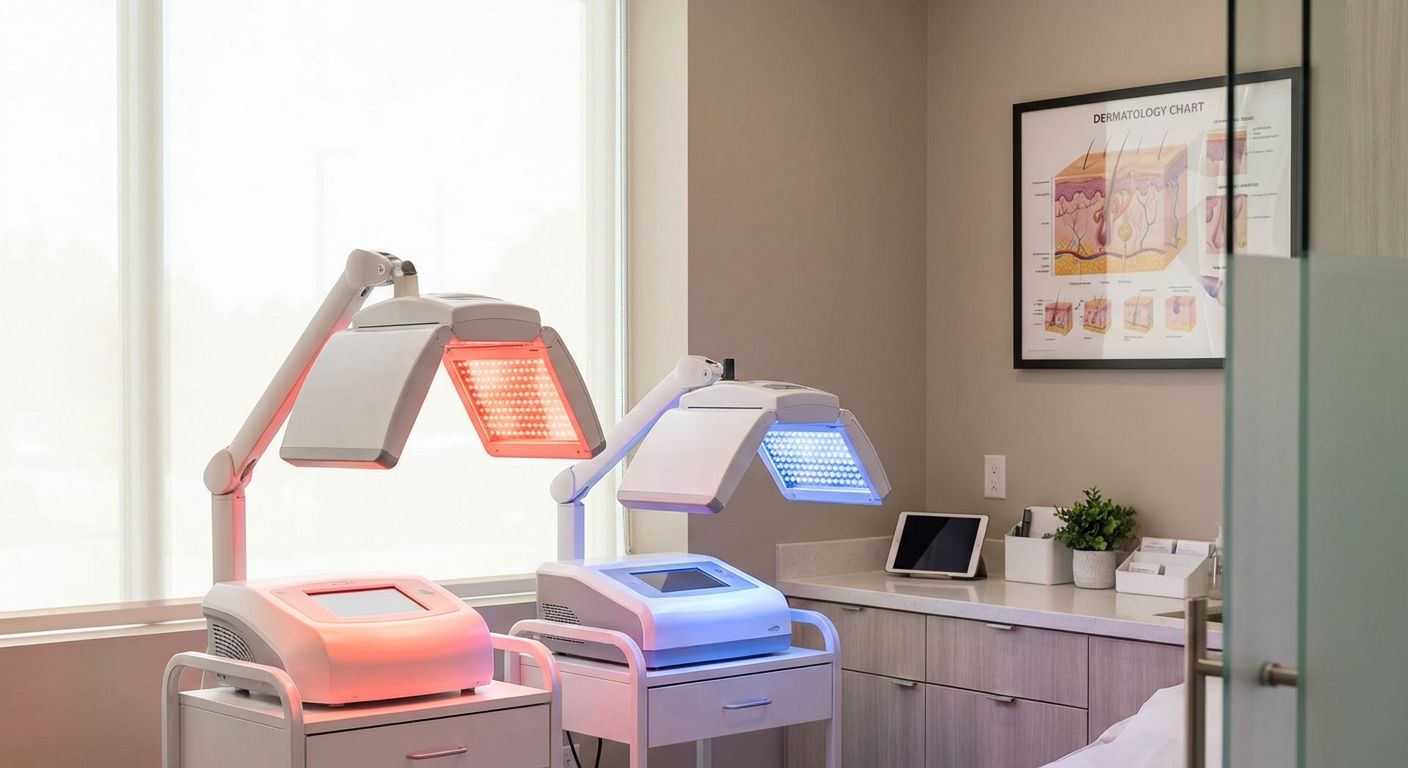
Acne Management: Red light reduces the inflammation that drives acne severity. When combined with blue light (which kills P. acnes bacteria), it addresses both the cause and the consequence of breakouts. Learn more in our red vs. blue light comparison.
Hyperpigmentation: Red wavelengths help normalize melanocyte activity, gradually fading dark spots and evening skin tone. See our hyperpigmentation treatment guide.
Wound Healing (Surface): Red light accelerates healing of surface wounds, surgical incisions, and post-procedural recovery by promoting cell proliferation and reducing inflammation.
Best Uses for Near-Infrared Light (810–850nm)
NIR shines for deeper tissue applications:
Joint Pain and Inflammation: NIR penetrates deep enough to reach joint tissue, reducing inflammatory markers and promoting cartilage health. Studies show significant pain reduction in osteoarthritis and rheumatoid arthritis patients.
Muscle Recovery: Athletes use NIR to accelerate post-exercise recovery. Research demonstrates reduced delayed-onset muscle soreness (DOMS), decreased creatine kinase levels (a marker of muscle damage), and faster return to peak performance.
Deep Tissue Healing: Tendon injuries, deep bruising, and post-surgical recovery benefit from NIR's ability to reach tissue that red light cannot.
Neurological Applications: Transcranial photobiomodulation using NIR wavelengths (particularly 810nm and 1064nm) is being studied for traumatic brain injury, cognitive enhancement, and neurodegenerative conditions. For more on this, see our recent breakthroughs article.
Systemic Anti-Inflammation: NIR's deeper penetration allows it to modulate systemic inflammatory markers, which may benefit conditions beyond the treatment area.
Do You Need Both?
For most users, the answer is yes — a combination device offers the broadest benefits. Here's a decision framework:
Red light only makes sense if your concerns are exclusively skin-deep: wrinkles, acne, pigmentation, skin texture. A red-only LED face mask handles these effectively.
Near-infrared only makes sense if your primary goals are pain relief, muscle recovery, or deep tissue healing and you're less concerned about surface-level skin improvements.
Both wavelengths is the best choice for anyone who wants comprehensive benefits, or whose concerns span surface and deep tissue. Most quality panels and many LED masks now include both wavelengths.
Can You Feel the Difference?
Red light: You'll see a bright red/orange glow. No warmth at therapeutic doses from LED devices (some warmth from high-power panels at close range).
Near-infrared: You won't see anything (it's invisible). Some users report a gentle warming sensation, especially from higher-powered panels, though this is subtle and not comparable to heat therapy.
Both wavelengths are non-thermal at standard treatment doses — they work through photochemical mechanisms, not heat. This is an important distinction from infrared saunas, which use much longer wavelengths specifically for thermal effects. Review our safety guide for important precautions with both wavelength types.
Key Specs to Compare When Shopping
When evaluating devices, compare these wavelength-specific specifications:
Wavelength accuracy: A device claiming "660nm" should actually peak at 660nm ±10nm. Quality manufacturers publish spectral output data. Ratio control: Some devices let you toggle between red-only, NIR-only, or combined modes. This flexibility is valuable for targeting specific conditions. Power density per wavelength: A device with 100 mW/cm² total output split 50/50 between red and NIR delivers 50 mW/cm² of each — check whether specs report combined or per-wavelength numbers.
The Bottom Line
Red light and near-infrared light are complementary, not competing. Red light (630–660nm) excels at skin-level improvements while NIR (810–850nm) reaches deeper tissue for joint, muscle, and systemic benefits. The best approach for most people is a device that delivers both, used consistently over 8–12+ weeks. Your specific goals determine which wavelength to emphasize, but having access to both gives you the most therapeutic flexibility.





.svg)
.jpeg)