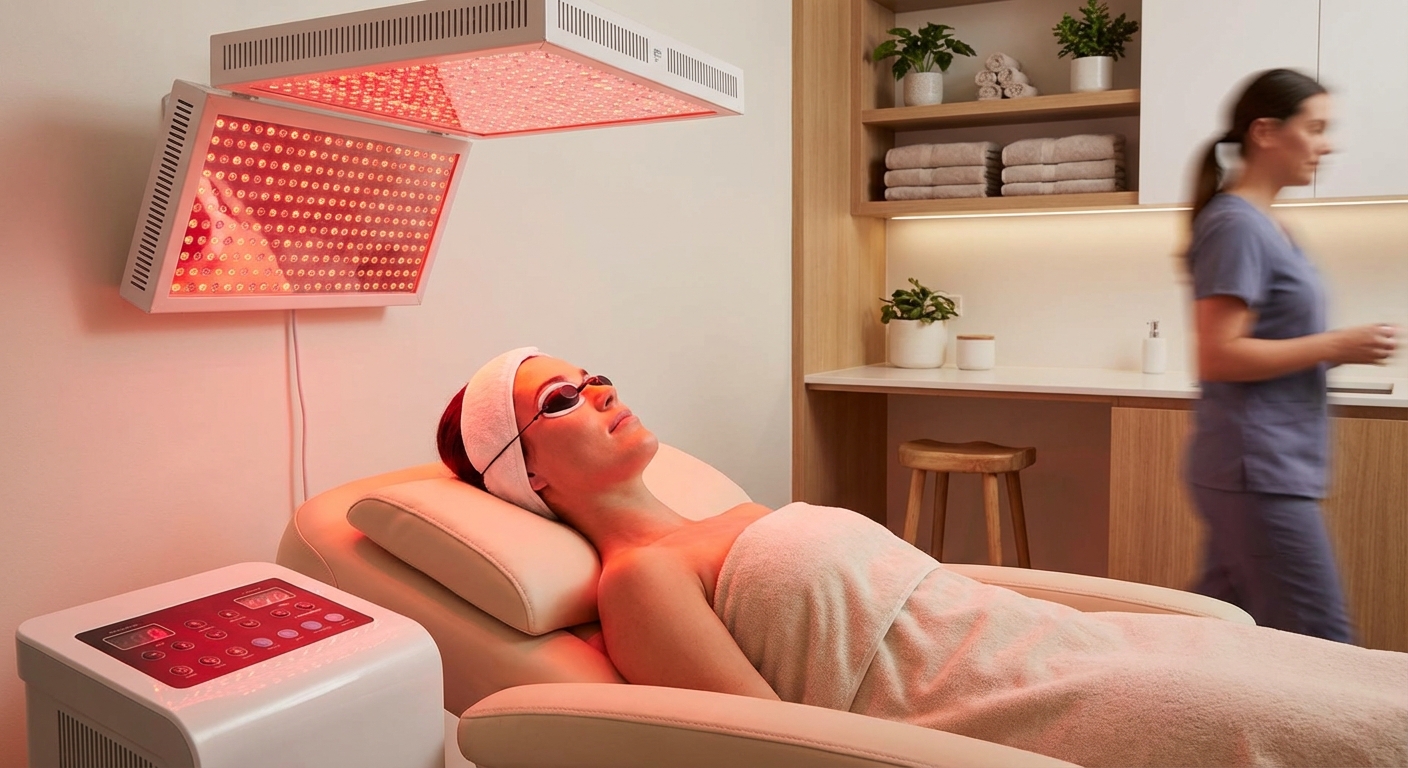
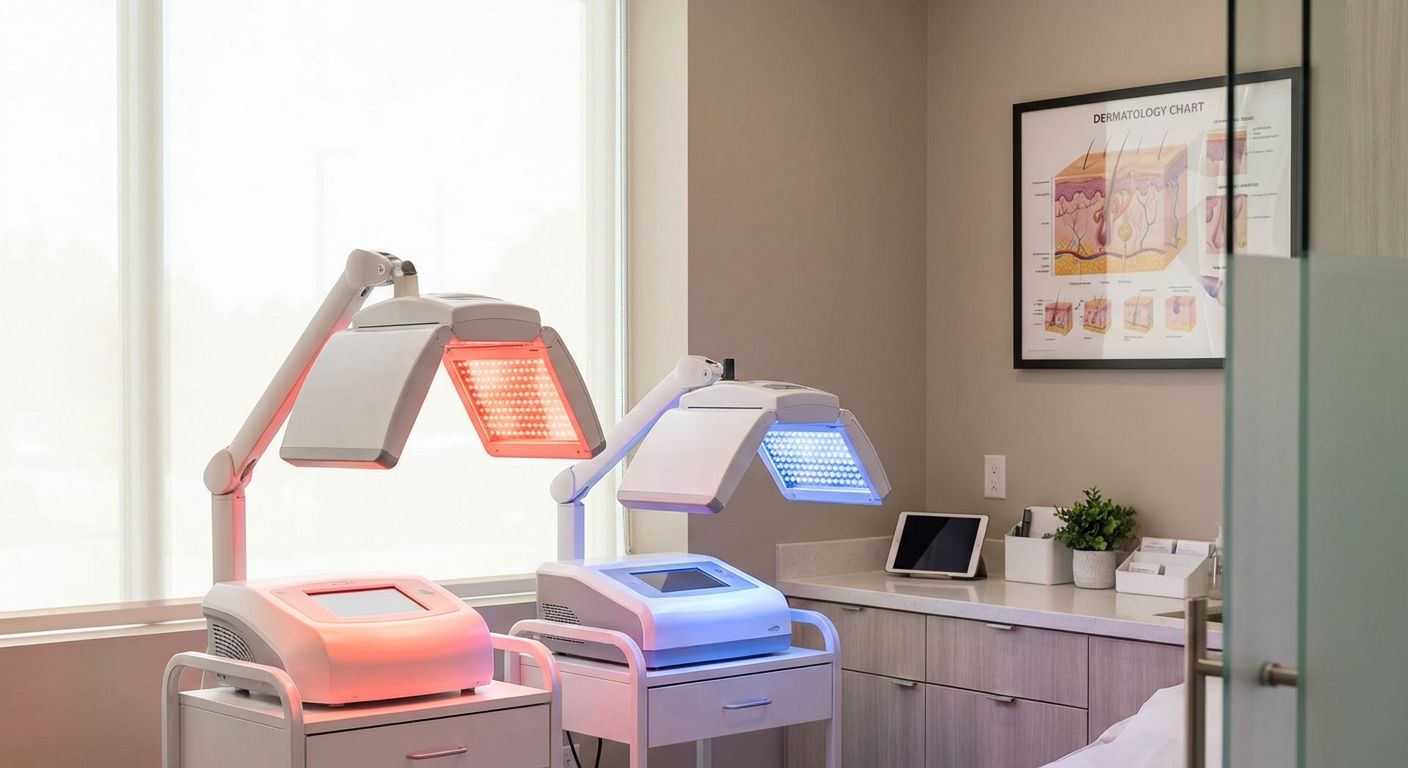
If you've spent any time researching red light therapy devices, you've encountered wavelength numbers like 630nm, 660nm, and 850nm. But what do these numbers actually mean, and does the difference between 630nm and 660nm matter in practice? This guide breaks down the science behind each wavelength so you can make informed decisions. (For a broader introduction to how light therapy works, see our evidence-based overview.)
What Wavelength Numbers Mean
The "nm" stands for nanometers — a measurement of the wavelength of light. Different wavelengths correspond to different colors and, more importantly, different penetration depths and biological effects. In photobiomodulation, the therapeutically useful range spans roughly 600–1000nm, often called the "optical window" because these wavelengths can penetrate biological tissue without being fully absorbed by water or blood.
The Major Wavelengths Compared
630nm — Shallow Red
Penetration: 1–3mm (epidermis and superficial dermis). What it does best: Surface-level skin rejuvenation, mild inflammation reduction, and wound healing at the skin surface. It stimulates keratinocyte proliferation and has moderate effects on fibroblast activity.
Where it's used: Many multi-color LED face masks include 630nm as one of several wavelengths. It's effective for mild skin texture improvement and is sometimes combined with blue light for acne treatment.
Limitations: The shallowest of the red wavelengths. Less effective than 660nm for collagen stimulation because it doesn't penetrate as deeply into the dermis where fibroblasts reside. Not adequate for deep tissue applications.
660nm — Deep Red (The Skin "Sweet Spot")
Penetration: 3–5mm (full dermis including the reticular layer). What it does best: This is the most-studied wavelength for skin rejuvenation. 660nm light reaches the fibroblast-rich reticular dermis where collagen and elastin synthesis occur. It has the strongest evidence for collagen production, wrinkle reduction, pigmentation normalization, wound healing and tissue repair, and anti-inflammatory effects at the skin level.
Where it's used: The primary wavelength in most quality LED face masks and the red light component of dual-wavelength panels. See our LED mask reviews.
Why it matters: If a device only offers one red wavelength, 660nm is the one you want. The difference between 630nm and 660nm is clinically meaningful for anti-aging outcomes.
810nm — Near-Infrared (Deep Tissue)
Penetration: 10–30mm+ (subcutaneous tissue, muscle, joint). What it does best: 810nm is the most-studied near-infrared wavelength for deep tissue applications. Research shows particular effectiveness for neurological applications (transcranial photobiomodulation for brain health), muscle recovery (reducing DOMS and creatine kinase levels), and wound healing in deeper tissue layers.
Where it's used: Professional panels, targeted therapy devices, and research-grade equipment. Less common in consumer face masks. See our breakthroughs article for emerging 810nm applications.
830nm — Near-Infrared (Wound Healing)
Penetration: 10–25mm. What it does best: Similar depth to 810nm but with slightly different absorption characteristics. 830nm has particularly strong evidence for wound healing and tissue repair and post-surgical recovery. Some studies suggest it has a broader absorption peak than 810nm, meaning it activates a slightly wider range of chromophores.
Where it's used: Multi-wavelength panels from manufacturers like PlatinumLED include 830nm alongside other wavelengths for comprehensive coverage.
850nm — Near-Infrared (The Deepest Standard Wavelength)
Penetration: 15–30mm+ (deep muscle, joint capsules, bone surface). What it does best: 850nm penetrates the deepest of the commonly available wavelengths. It excels at joint pain and arthritis management (see our joint pain guide), deep muscle recovery and athletic performance, and systemic anti-inflammatory effects.
Where it's used: The near-infrared component of most dual-wavelength devices. When a panel offers "660nm + 850nm," this is the most common and well-supported wavelength combination available.
Does the Difference Between Similar Wavelengths Matter?
The practical difference between similar wavelengths (e.g., 630nm vs. 660nm, or 810nm vs. 850nm) is meaningful but not dramatic. Within red wavelengths, 660nm consistently outperforms 630nm for anti-aging in clinical studies. If choosing between them, prioritize 660nm. Within NIR wavelengths, 810nm, 830nm, and 850nm all fall within the therapeutic window and all produce positive results. The differences are subtle, and any of these wavelengths will effectively treat deep tissue. Between categories, the difference between red and NIR is substantial and clinically significant. A 660nm device cannot do what an 850nm device does, and vice versa. See our detailed NIR vs. red light comparison.
Single vs. Multi-Wavelength Devices
Single wavelength devices (typically 660nm) are simpler, often cheaper, and effective for their specific application. If your only goal is facial skin health, a 660nm-only device can work well.
Dual wavelength devices (typically 660nm + 850nm) offer the broadest practical coverage. This is the most popular and well-supported combination, addressing both skin-level and deep-tissue needs.
Multi-wavelength devices (3–5 wavelengths) are becoming more common, particularly from PlatinumLED and similar manufacturers. These include combinations like 630+660+810+830+850nm. The theoretical benefit is broader chromophore activation, though clinical evidence comparing multi-wavelength to dual-wavelength outcomes is still limited.
For most users, a dual-wavelength (660nm + 850nm) device represents the best balance of therapeutic coverage, simplicity, and value. For detailed device guidance, see our buyer's guide.
Wavelengths to Be Skeptical About
Be cautious of devices marketing wavelengths outside the well-studied ranges. Green light (520nm) has minimal penetration and very limited clinical evidence for therapeutic benefit. Yellow/amber light (590nm) has some evidence for redness and sensitivity but far less research than red or NIR. Any wavelength over 1000nm enters the thermal infrared range, which works through heat rather than photobiomodulation.
The Bottom Line
For skin health and anti-aging, 660nm is the gold standard. For deep tissue, joints, and muscle recovery, 850nm leads the evidence. A device combining both covers the widest range of therapeutic applications. Don't overthink the difference between 810nm and 850nm or stress about whether 630nm would be "better" than 660nm — the clinical evidence clearly favors 660nm for skin and any NIR wavelength in the 810–850nm range for deep tissue.





.svg)
.jpeg)